Presentation: One Failed Test, Five Possible Causes
This self-authored, eight-slide technical presentation explains a practical approach to automation failure investigation. Scroll through the slides below. All examples and timings are fictional teaching material.
Slide 1: One failed test. Five possible causes.
A practical guide to automation failure analysis by Siddhartha Mukherjee, Principal Quality Engineer.
Slide 2: A failure is the start of an investigation
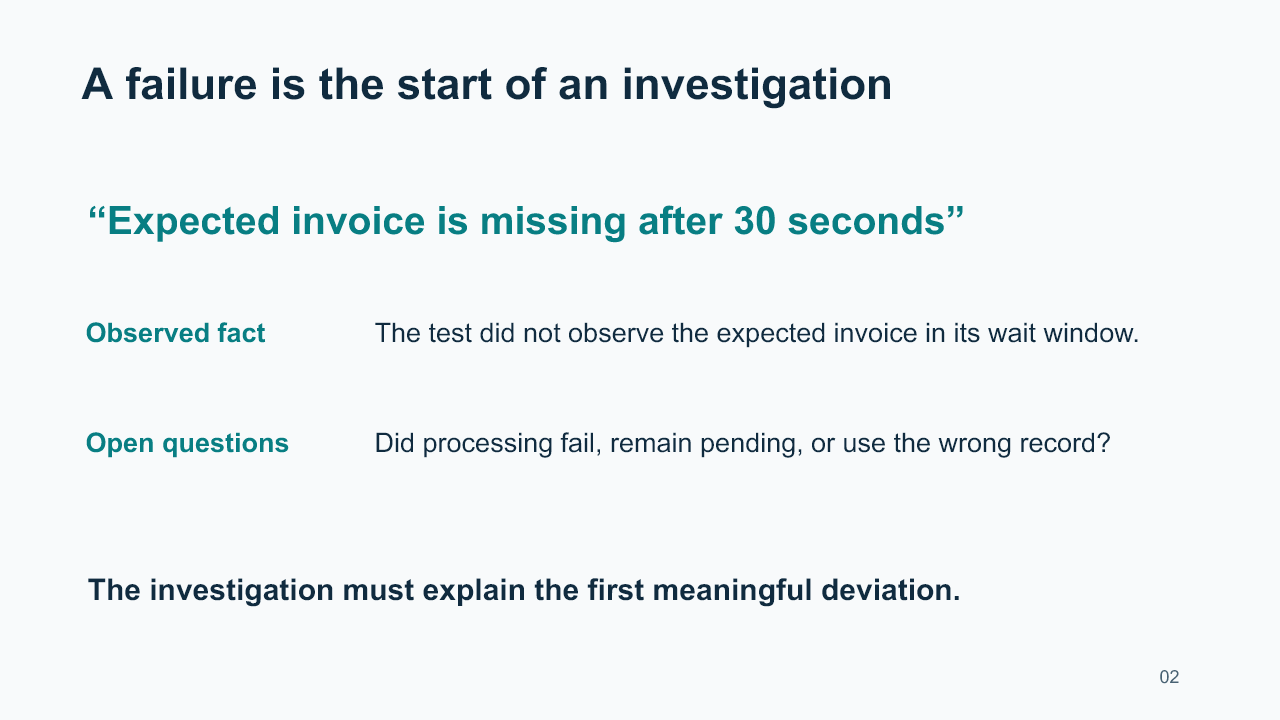
A missing invoice after 30 seconds is an observation. Investigate whether processing failed, remains pending, or used the wrong record.
Slide 3: Five possible causes
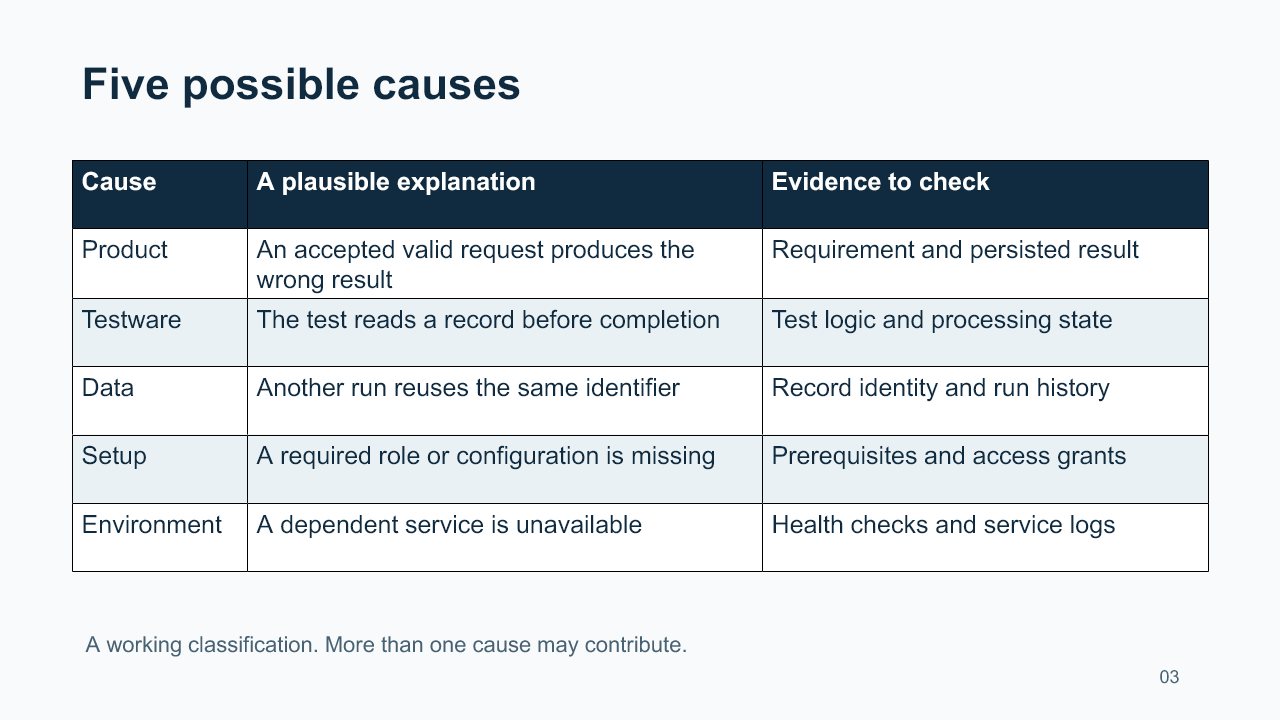
Consider product behaviour, testware, data, setup and environment. Classifications may overlap and must follow evidence.
Slide 4: Evidence that makes a failure reproducible
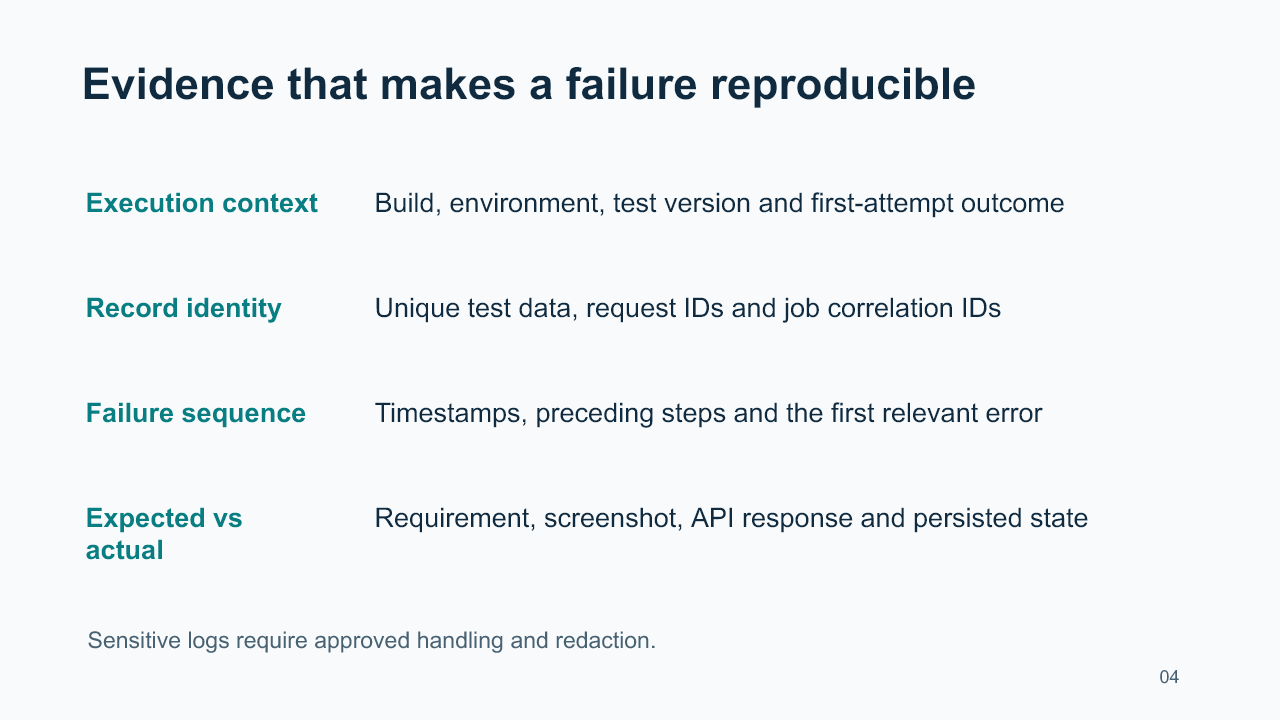
Preserve execution context, unique record identity, failure timestamps, expected behaviour and actual results.
Slide 5: A fictional import failure
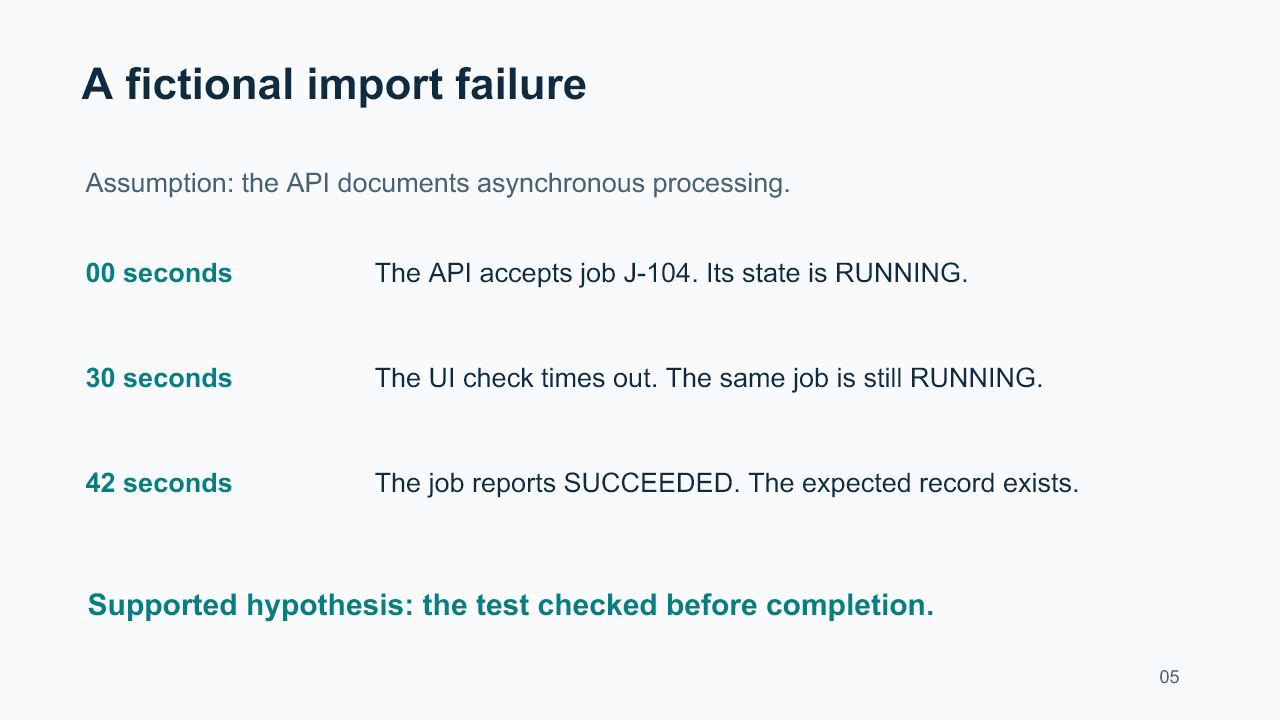
In this fictional asynchronous import, the job remains RUNNING at 30 seconds and reports SUCCEEDED at 42 seconds. The evidence supports an early validation hypothesis. Check the documented processing contract before concluding.
Slide 6: AI assistance and human verification
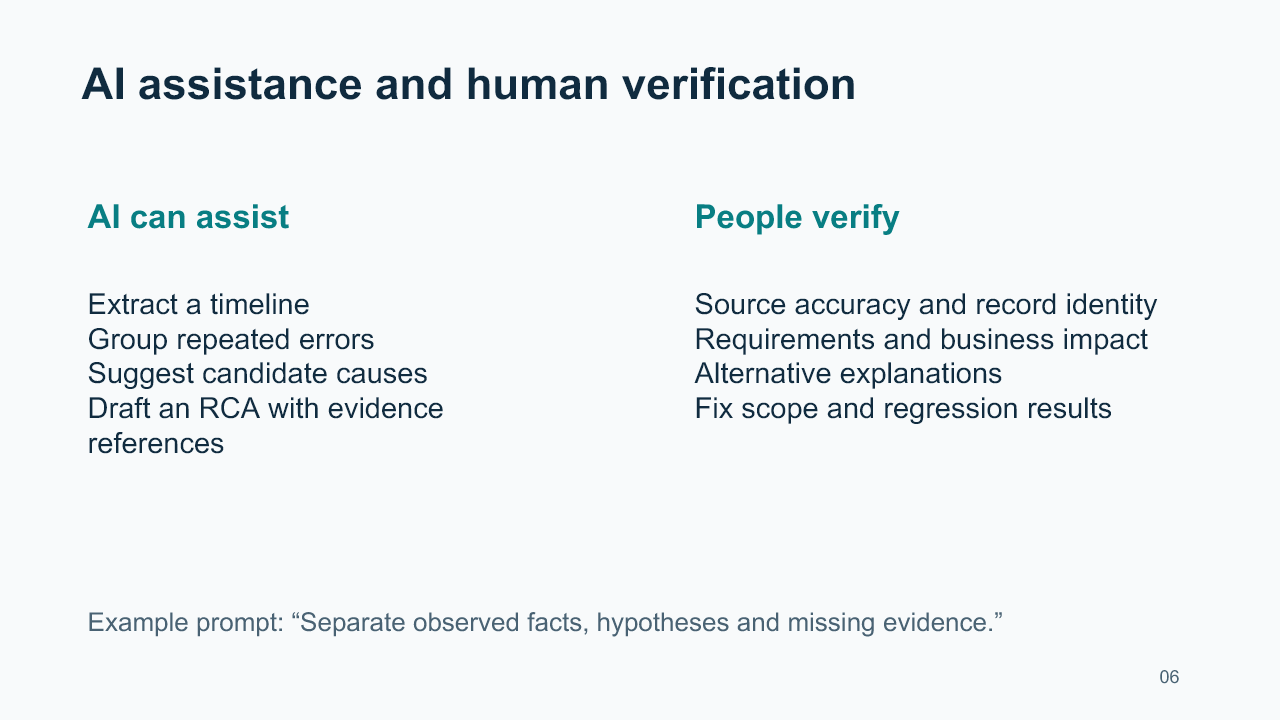
AI can assemble timelines and suggest hypotheses. People verify source accuracy, record identity, requirements, business impact and fix results.
Slide 7: Correction and validation
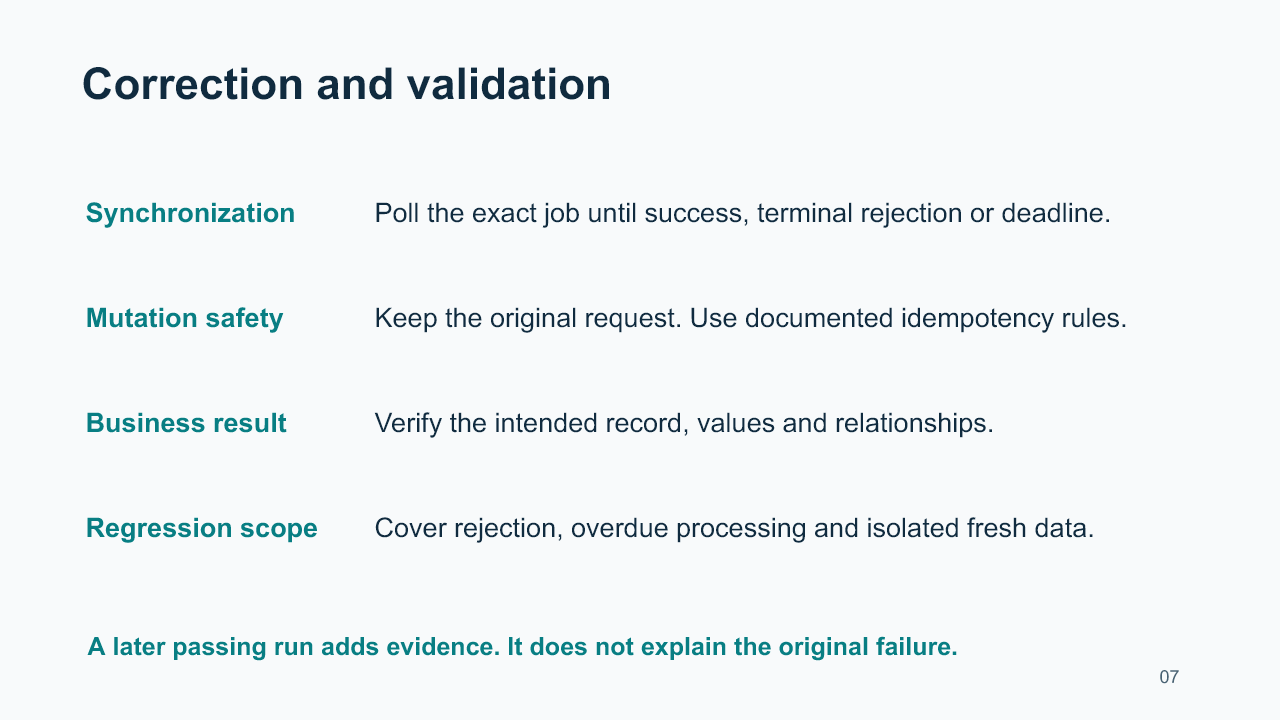
Poll the exact job with a bounded deadline, handle terminal rejection, respect idempotency, and verify the intended business result.
Slide 8: A reusable investigation checklist
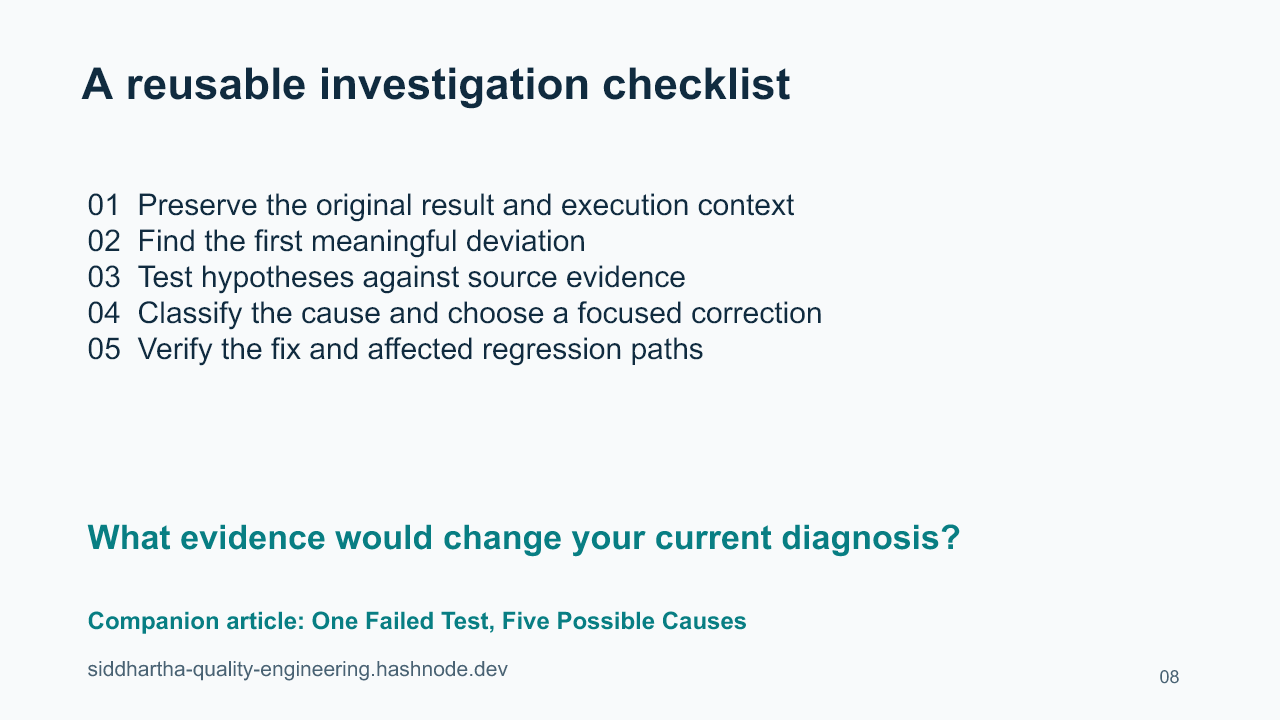
Preserve the first result, identify the earliest deviation, test hypotheses, choose a focused correction, and verify affected regression paths.
Further reading
Read the companion article: One Failed Test, Five Possible Causes.
Author: Siddhartha Mukherjee. This presentation expresses general quality engineering practices and does not imply employer endorsement.
Comments
Join the discussionNo comments yet. Be the first to comment.